
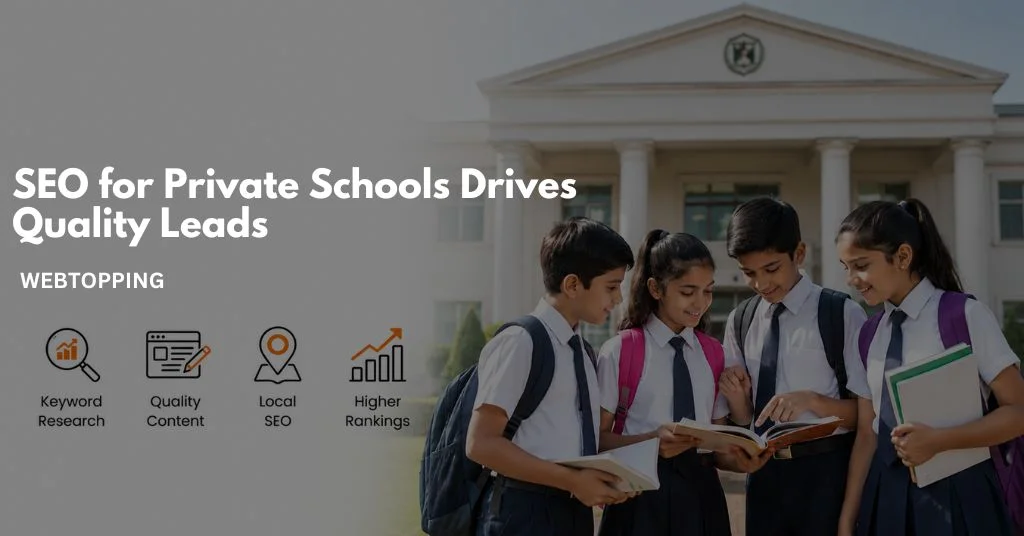
In today’s highly competitive digital landscape, private schools can no longer rely solely on traditional marketing methods such as brochures, word-of-mouth, or local advertisements. The way parents search for schools has dramatically changed, with most turning to search engines like Google to explore and compare educational options. This shift makes it essential for schools to build a strong online presence.
Search Engine Optimization (SEO) plays a critical role in ensuring that a school’s website appears in front of the right audience at the right time. When implemented correctly, SEO helps schools attract more website visitors, improve credibility, and ultimately increase student enrollment. Schools that fail to adopt SEO risk losing visibility to competitors who are already investing in digital marketing strategies.
Understanding SEO for Educational Institutions
SEO for private schools is not just about ranking higher on search engines; it’s about connecting with parents and students who are actively searching for quality education. It involves optimizing website content, improving technical performance, and targeting relevant keywords that reflect what potential parents are searching for.
Unlike generic businesses, schools must focus on location-based searches, reputation management, and informative content that answers parents’ concerns. From curriculum details to admission procedures, every piece of information should be easily accessible and optimized for search engines.
Core Components of a Strong SEO Strategy
A successful SEO strategy is like building a strong foundation for your online presence. It requires planning, consistency, and the right combination of techniques. Each component plays a specific role in helping your website rank higher and attract the right audience.
Below is a deeper breakdown of the most important components:
1. Smart Keyword Research for Education Sector
Keyword research involves understanding what your target audience is searching for and how they search online. Without this foundation, your SEO efforts may fail to reach the right people.
Effective keyword targeting includes:
- Location-focused keywords: General terms like “schools near me” or “best schools nearby.”
- Curriculum-related keywords: Such as “CBSE schools,” “ICSE schools,” or “international schools.
- Long-tail keywords: Detailed searches that show strong intent, such as “schools with modern facilities” or “affordable schools with transport.”
Strategically placing these keywords throughout your website, in headings, content, and meta tags, improves search visibility and ensures relevance to user needs.
2. On-Page SEO That Drives Engagement
Your website is often the first impression parents have of your school. If it is slow, confusing, or difficult to navigate, visitors may leave quickly. On-page SEO ensures your website is both search-engine-friendly and user-friendly.
Key elements include the following:
- Title Tags & Meta Descriptions: These appear in search results; make them attractive and keyword-focused.
- Headings Structure (H1, H2, H3): Organize content logically for readability.
- URL Structure: Keep URLs clean and descriptive (e.g., /admissions-process).
- Image Optimization: Use alt text and compress images for faster loading.
- Internal Linking: Connect related pages to improve navigation and SEO.
Well-structured and optimized pages not only rank higher in search results but also keep visitors engaged for longer, increasing the chances of conversion.
3. Technical SEO and Website Performance
Technical SEO focuses on optimizing your website’s backend structure so search engines can easily crawl and index it. Even high-quality content may underperform if technical issues exist.
Key aspects of technical SEO include:
- Fast loading speed: Improves user experience and reduces bounce rates.
- Secure HTTPS protocol: Builds trust and is favored by search engines.
- Mobile-friendly design: Ensures the site performs well on smartphones and tablets.
- Clean and structured URLs: Makes navigation easier for users and search engines.
A well-optimized technical foundation not only improves search engine rankings but also enhances overall user experience and satisfaction.
4. Local SEO for Maximum Visibility
Local SEO is essential for schools because most parents search for educational institutions within their nearby area. Even if your school offers excellent facilities and education, it won’t attract admissions if it doesn’t appear in local search results.
Effective local SEO strategies include:
- Optimizing Google Business profiles: Ensures accurate school information appears in local search results.
- Maintaining consistent contact information: Name, address, and phone number (NAP) should be the same across all platforms.
- Encouraging positive reviews: Good reviews build trust and improve local rankings.
- Using location-focused keywords: Helps search engines connect the school with nearby searches.
A strong local SEO strategy ensures your school appears when parents are searching nearby, increases trust through reviews and accurate information, and ultimately drives more inquiries and admissions.
5. Content Strategy Building Helpful Resources for Parents
A strong content strategy focuses on helping parents make informed decisions about their child’s education. By creating useful and relevant content, your school can build trust, answer important questions, and improve its visibility on search engines.
Types of Content to Consider
- Blog Articles: Write simple guides like choosing the right school or comparing private vs. public schools.
- Video Content: Share campus tours, teacher introductions, and parent testimonials to build trust.
- Resources: Offer checklists, admission guides, or fee planning tips for added value.
Partnering with an SEO agency like Webcazador can further enhance your strategy by ensuring your content is both user-friendly and optimized for search engines.
6. Mistakes That Limit School SEO Growth
Even with a strong SEO plan, certain common mistakes can prevent your school’s website from achieving good rankings and attracting parents. Understanding these mistakes helps you avoid them and improve your overall strategy.
- Wrong Keywords: Targeting broad terms instead of local, intent-based searches.
- Slow Website: Poor speed and mobile experience drive visitors away.
- Inconsistent Info: Different NAP details confuse search engines.
- No Fresh Content: Outdated websites lose rankings and trust.
- Ignoring Reviews: Negative or no reviews reduce credibility.
- Technical Issues: Broken links, no HTTPS, or crawl errors hurt SEO.
Avoiding these mistakes is just as important as implementing SEO strategies. A well-optimized website with strong content, technical performance, and local visibility will consistently attract more parents and increase admissions.
7. Tracking and Measuring SEO Performance
To understand whether your SEO efforts are working, it is important to regularly track performance. Without proper monitoring, you won’t know what strategies are effective and where improvements are needed.
Key performance indicators (KPIs) to monitor include:
- Website Traffic: Measure how many visitors are coming to your site through search engines.
- Keyword Rankings: Track how well your targeted keywords are performing in search results.
- Bounce Rate: Analyze how many visitors leave your website quickly without interacting.
- Conversion Rate: Monitor how many visitors take action, such as filling out admission forms or making inquiries.
Using tools like Google Analytics and Google Search Console helps you gather valuable insights. These insights allow you to refine your strategy, focus on what works, and eliminate ineffective tactics.
8. Continuous Improvement and SEO Updates
SEO is not a one-time activity; it is an ongoing process. Search engine algorithms frequently change, and user behavior evolves over time. To stay competitive, your SEO strategy must adapt accordingly.
Ways to continuously improve your SEO include:
- Updating Content Regularly: Refresh old blogs and pages with new information and keywords.
- Analyzing Competitors: Understand what other schools are doing and identify opportunities to improve.
- Improving User Experience: Continuously enhance website design, speed, and usability.
- Staying Updated with SEO Trends: Follow the latest updates in search engine algorithms and best practices.
By consistently refining your strategy, your school can maintain strong search rankings, stay relevant to parents’ needs, and continue attracting new admissions over time.
Final Thoughts
SEO is no longer optional for private schools aiming to thrive in a competitive environment. It is a powerful tool that connects institutions with the right audience at the right time.
By implementing strong private school SEO strategies, schools can significantly enhance their online presence, attract more qualified inquiries, and build lasting trust with parents.
For institutions seeking expert guidance, Webcazador offers specialized solutions tailored to the education sector. Their approach focuses on delivering measurable results, helping private schools improve visibility, drive engagement, and ultimately increase admissions through strategic SEO implementation.